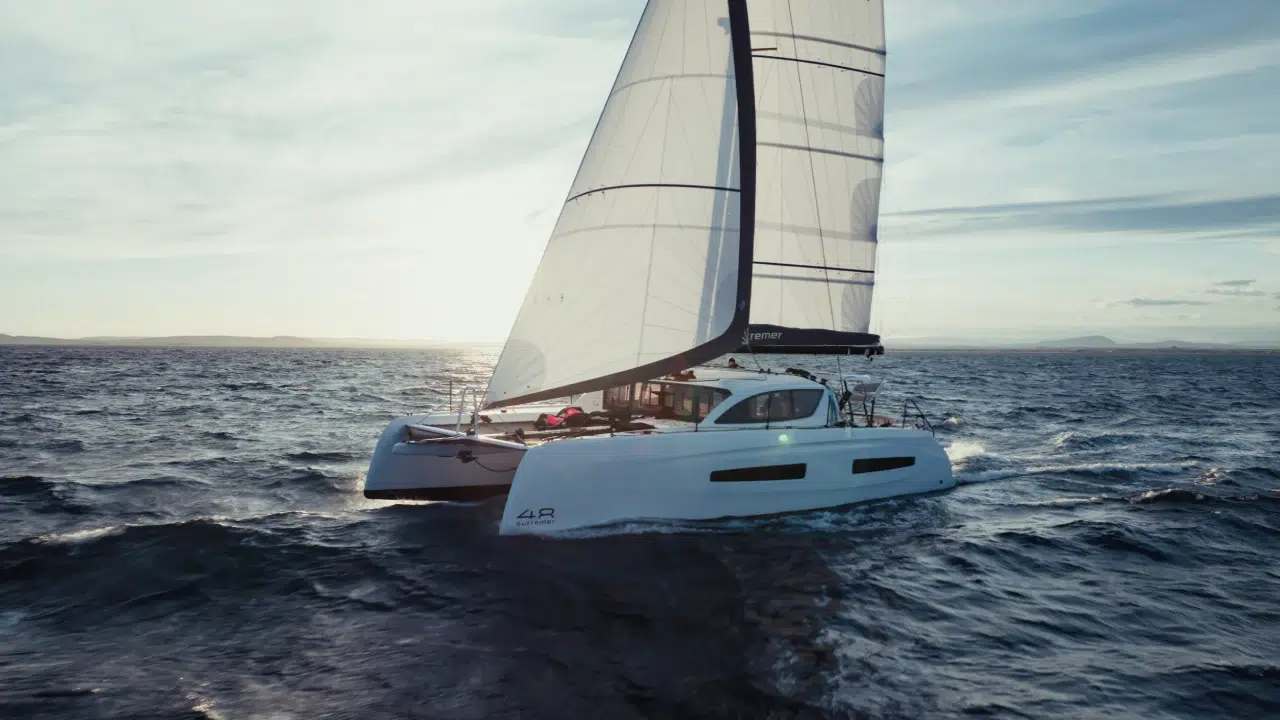
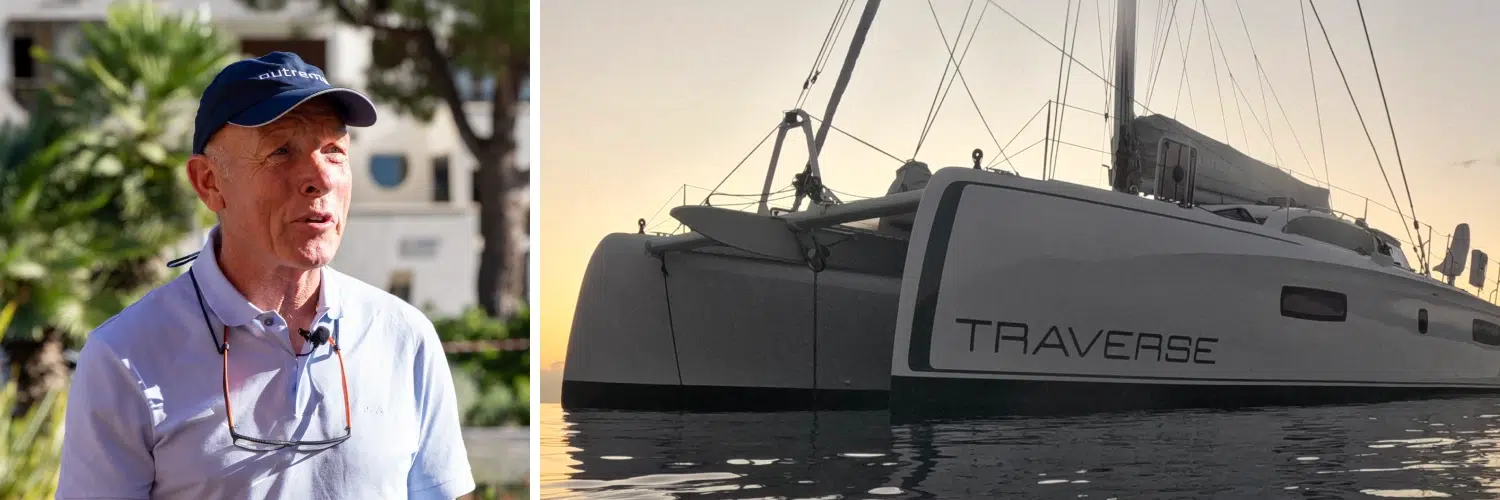
Owner’s feedback – Mike Golding – Outremer 51 Traverse
A sailor’s perspective on how Outremer catamarans successfully combine speed, safety, and onboard comfort – without compromise.
“Like many sailors, I had long imagined buying a boat and disappearing over the horizon to explore the world at my own pace. That may sound surprising given that I spent more than 35 years yacht racing professionally. I have crossed every major ocean, sailed hundreds of thousands of miles, and competed in some of the world’s toughest races – but always between a defined start and finish. Even delivery passages came with schedules and deadlines. There was rarely the freedom simply to stop, linger, and enjoy a place.
Although I cruised extensively in my late teens, it is only recently that Andrea and I found ourselves in a position to search for the right boat for true long-distance family cruising. Like so many prospective owners, we spent endless hours studying websites, brokerage listings, and owner reviews. There is certainly no shortage of choice.
Initially, I naturally gravitated towards monohulls – they are what I know best. But the more seriously we evaluated what we wanted from a cruising boat, the more compelling the catamaran became. In February 2024, we found what felt like the ideal balance: a 2022 Outremer 51, which we named Traverse.
The fact that Traverse was located in New Zealand ended up shaping an extraordinary family adventure: a voyage back to France via many of the places I had sailed past during my racing career, but never truly experienced.
An Outremer was already very high on my shortlist. The brand has built a formidable reputation for creating catamarans that are light, fast, immensely capable offshore, and engineered with safety very much at the forefront. Crucially, they achieve this without sacrificing the comfort needed for genuine liveaboard cruising.
That balance between performance and comfort is what ultimately drew us to the boat.
Of course, for similar money we could easily have bought a significantly larger monohull. But to match the living space offered by a 51-foot catamaran, a monohull would likely need to be closer to 70 feet. At that size, marina manoeuvring, maintenance, and short-handed handling become considerably more demanding for a family crew.”
Then there is the reality of living aboard
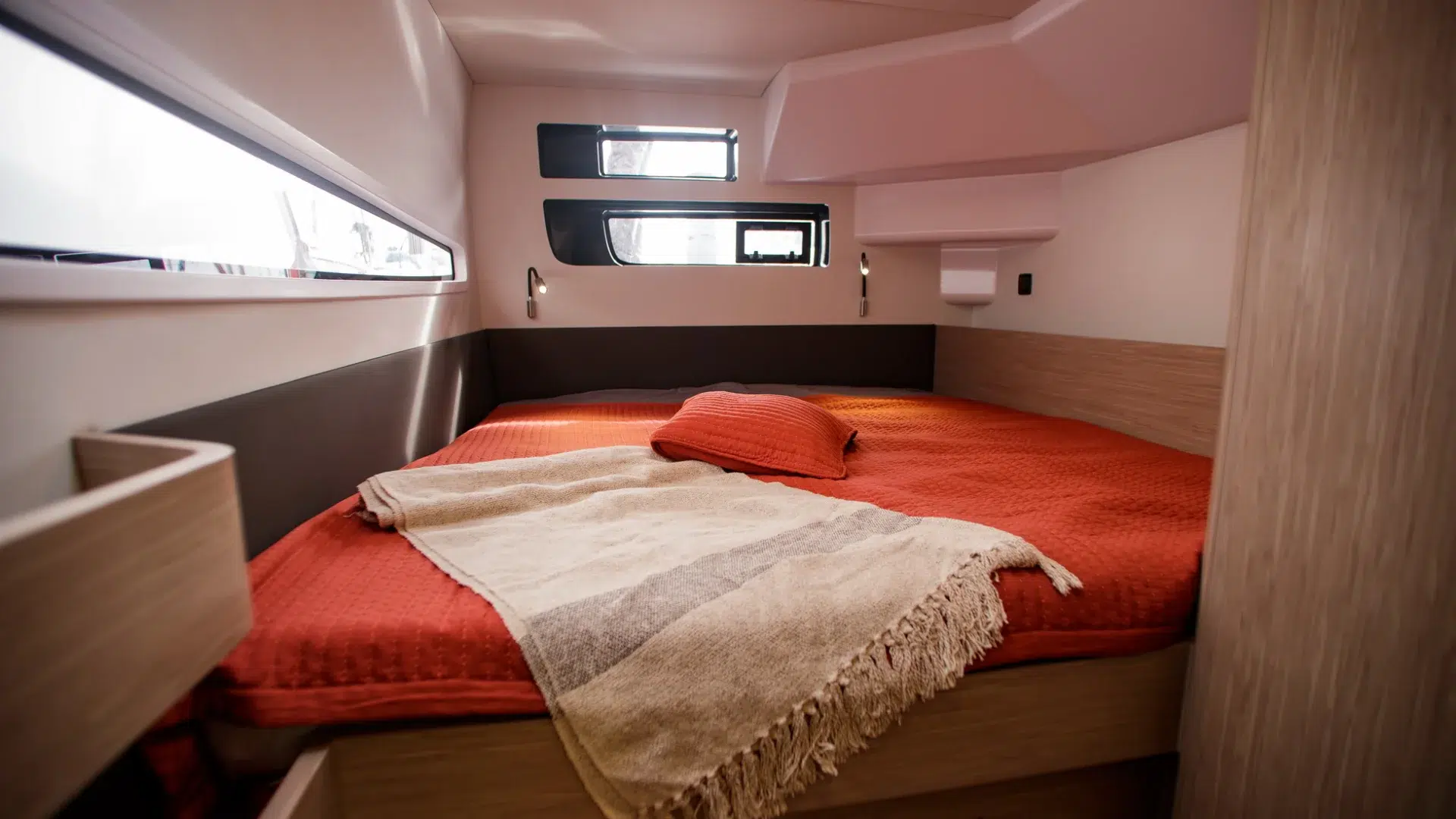
“Traverse is an owner’s version, meaning Andrea and I effectively have an entire hull to ourselves. The result is remarkable space and privacy: extensive storage, a generous shower room, and a large double berth where we could watch the world drift by through the hull windows. Our family and guests occupied the opposite hull, with another large double cabin and additional berths forward.
Equally important is the way a catamaran changes life at sea. On most monohulls, once you go below decks, you feel disconnected from the outside world. And, of course, the boat is constantly heeling. Even with a deck saloon design, when sailing you are often looking either at the sky or the sea rushing past at an angle.
A well-designed catamaran feels entirely different. Life remains connected to the horizon. You move around naturally, cook comfortably, sleep properly, and generally live as you would ashore – even when making fast offshore passages.
Our route from New Zealand took us north through Fiji and Vanuatu, then west via the Torres Strait to Darwin, where we paused for several weeks before continuing through Indonesia and across the Indian Ocean towards South Africa.
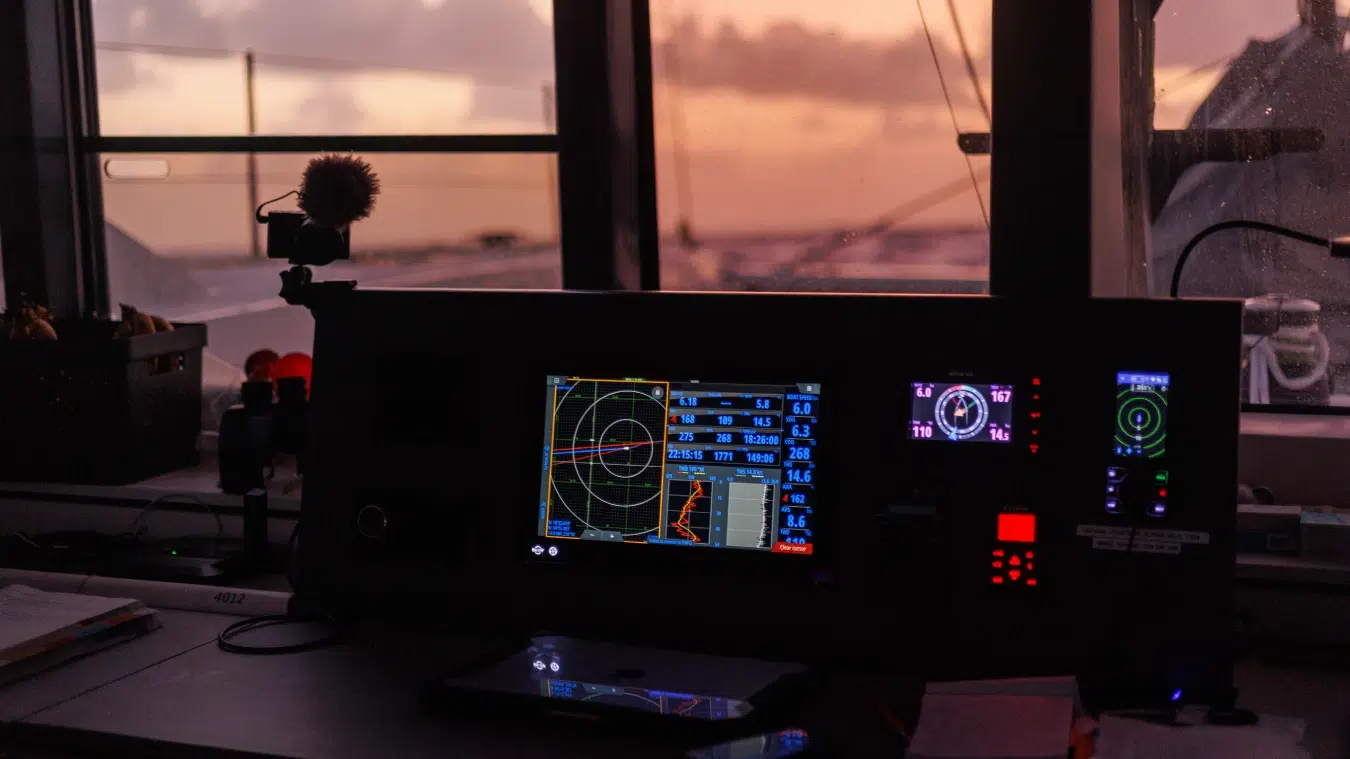
Along the way we met many other cruising sailors, and what became increasingly apparent was how capable the Outremer was as a genuine passagemaker. Our 51-foot catamaran consistently maintained passage speeds that often saw us arriving ahead of significantly larger yachts.
One passage reinforced the value of performance cruising for me. Departing Mauritius, a cyclone was developing to the east. We left confident that the boat had the speed to stay comfortably ahead of the system and complete a fast but safe passage to Richards Bay. Several other yachts, quite prudently, chose to remain in harbour and wait for the weather to pass. Many were delayed for more than ten days before conditions allowed them to continue.
That experience highlighted something important: speed is not simply about excitement or passage times. Offshore, speed can be a genuine safety feature. The ability to manoeuvre around weather systems – or stay ahead of them – materially increases your options as a skipper.”
Yet despite the performance, life aboard remained extraordinarily civilised
“On passage, you could place a cup down and still find it there later. We ate outside every single day, even in rougher conditions, thanks to the protected cockpit and excellent enclosure design. The boat remained comfortable, predictable, and easy to live on whether at anchor or offshore.
For me, that is where the real brilliance of the Outremer concept lies. It is not an extreme performance machine that compromises comfort, nor is it a floating apartment that sacrifices sailing ability. Instead, it occupies that elusive middle ground where safety, speed, practicality, and onboard comfort genuinely coexist.
After a lifetime spent racing boats designed primarily to win, discovering a yacht capable of crossing oceans quickly while still feeling like a home has been something of a revelation.”
Mike Golding – Outremer 51 Traverse owner
Continue navigation
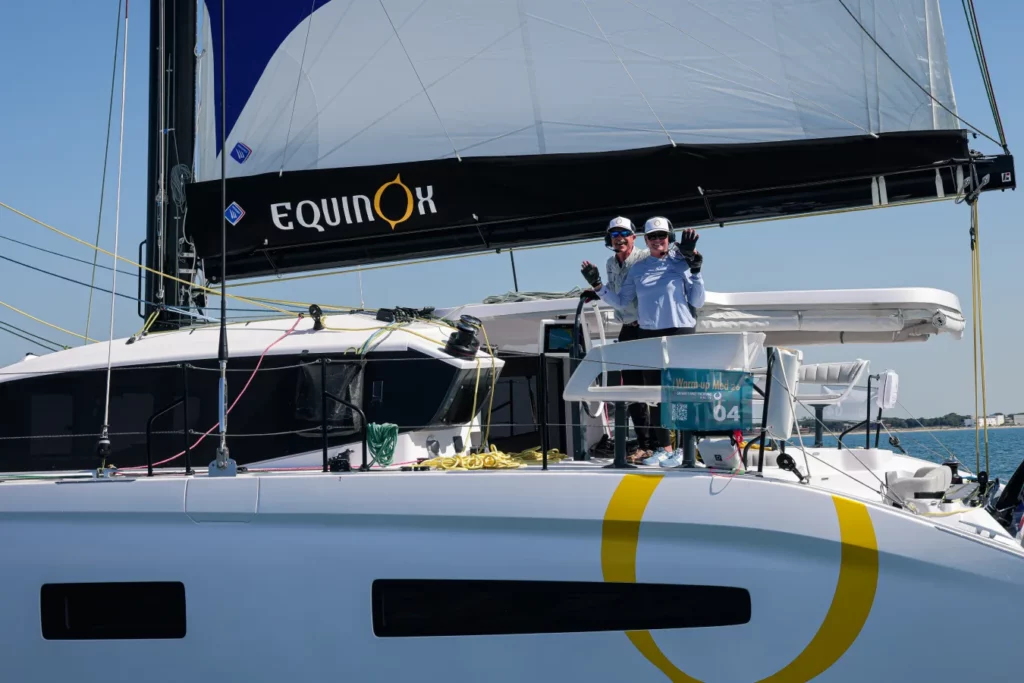
Lynne & Peter – EQUINOX – Outremer 55
“We counted back the years left and asked ourselves: well, what do we want to get done?”
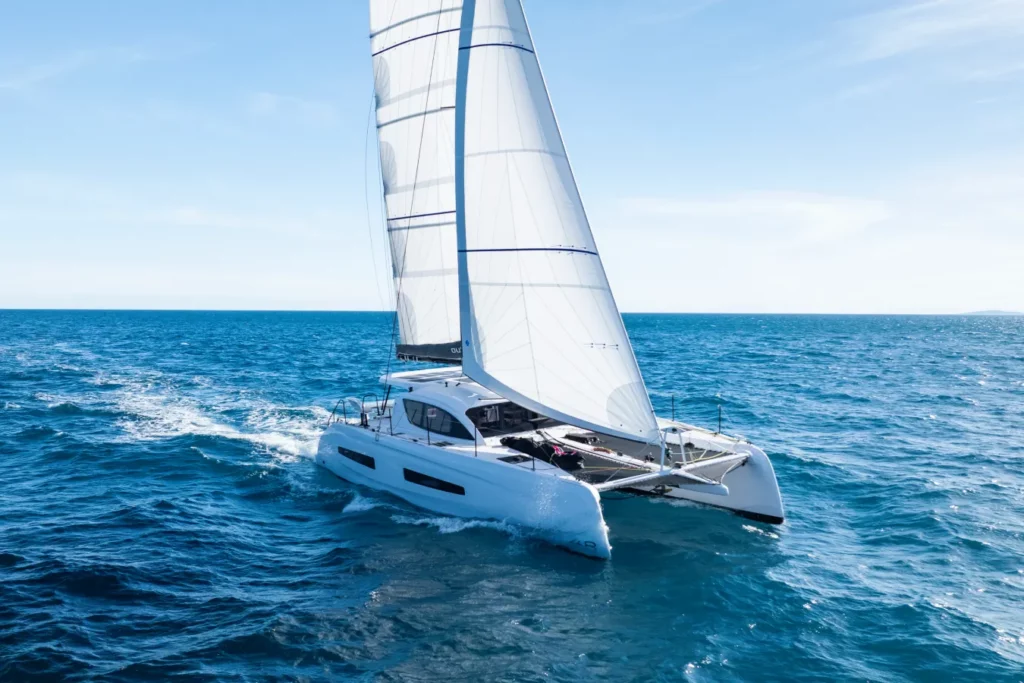
Blue-water boats are built to go sailing
Owning a new boat is like owning a new pair of shoes…
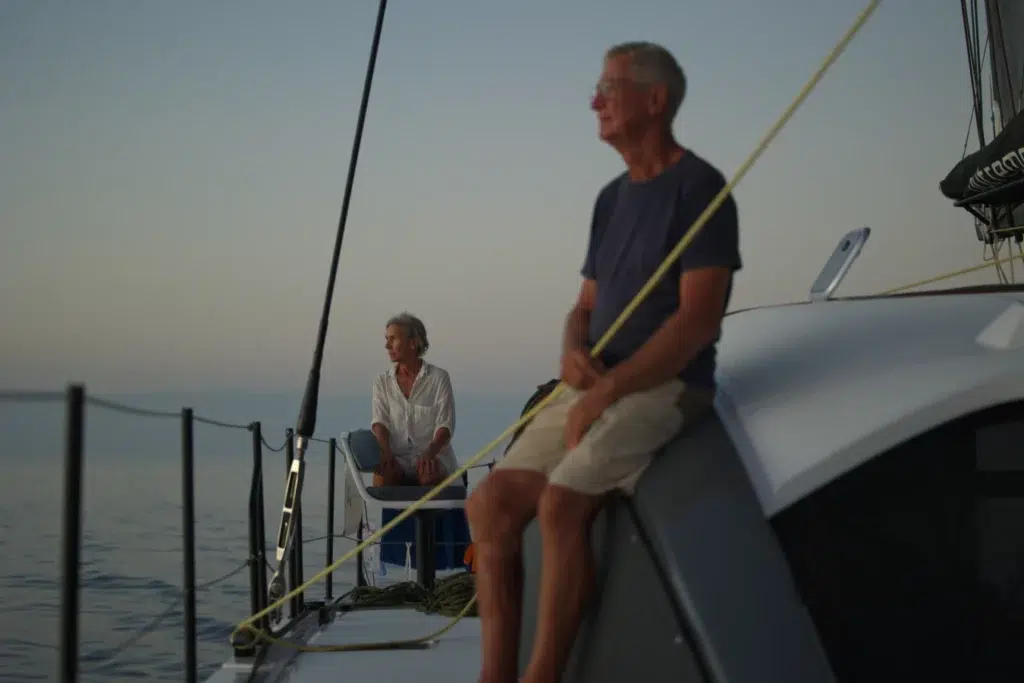
Should we go to the Pacific?
“To go to the Pacific, or not to go to the Pacific?” Is a hot topic right now. And one, that people are really struggling to grapple with.